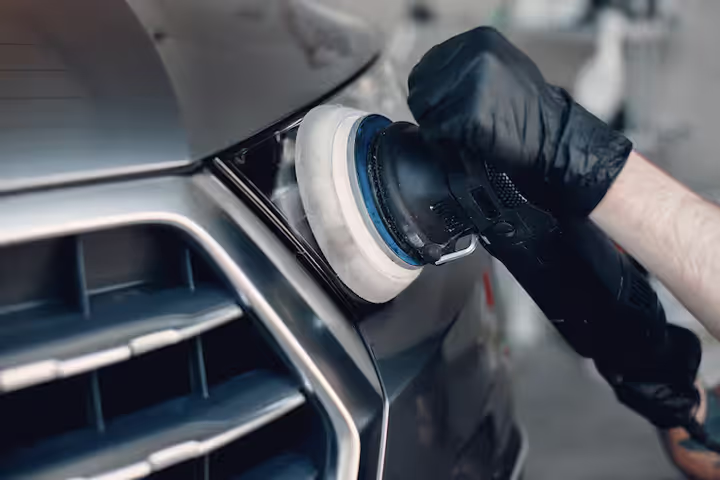
Polishing Equipment: A Guide to Machine Types, Materials, and Applications
Industrial polishing machines are used to improve the surface condition, appearance, and functional characteristics of materials such as metals, plastics, ceramics, glass, and selected composite materials.
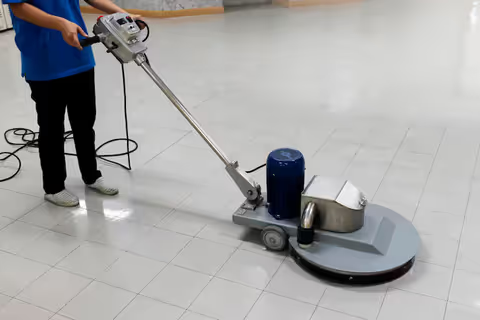
These machines range from manually assisted units to fully automated systems that control abrasive movement, pressure, speed, and polishing time. Industrial polishing equipment is widely used in manufacturing environments where consistent surface treatment is needed across repeated components.
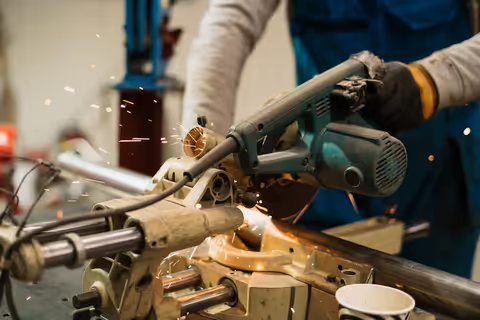
Modern metal polishing machines can perform operations such as smoothing, buffing, deburring, finishing, and surface preparation. Depending on the material and required result, manufacturers may use abrasive belts, wheels, brushes, discs, compounds, or other polishing media. The choice of equipment depends on factors such as material type, component shape, production volume, surface requirements, and the level of automation required.
Context
What Is a Polishing Machine?
A polishing machine is mechanical equipment designed to modify the surface of a workpiece through controlled contact with an abrasive or polishing medium. The process can remove small surface irregularities, marks, oxidation, burrs, or other imperfections.
The basic process involves three elements: the workpiece, the polishing medium, and controlled movement. Depending on the machine, either the workpiece or the polishing tool may rotate, move back and forth, or follow a programmed path.
Industrial polishing machines are used for both decorative and functional purposes. A smooth surface may improve visual appearance, reduce surface roughness, support subsequent coating processes, or help components meet specified dimensional and surface requirements.
How Industrial Polishing Equipment Developed
Traditional polishing relied heavily on manual techniques. Workers used abrasive materials, cloth wheels, brushes, compounds, and other tools to treat individual surfaces. Although these methods remain relevant for certain applications, industrial production increasingly uses mechanized equipment to provide controlled and repeatable processing.
Computer-controlled equipment has expanded the range of possible operations. Sensors, programmable controllers, robotic arms, and automated workholding systems can now be integrated into automated polishing systems.
Main Types of Polishing Machines
Different machine configurations are designed for different workpieces and applications. Common categories include:
- Rotary polishing machines: Use rotating wheels, discs, or brushes to process surfaces.
- Belt polishing machines: Use continuous abrasive belts for surface preparation and finishing.
- Wheel polishing machines: Use rotating polishing wheels and compounds for metal finishing.
- Vibratory polishing equipment: Moves components and abrasive media together to process multiple small parts.
- Automatic polishing machines: Use programmed sequences to control repetitive operations.
- Precision polishing machines: Designed for applications where surface finish and process control require close attention.
- Robotic polishing systems: Combine robotic movement with polishing tools for complex or repetitive components.
The appropriate configuration depends on the geometry, material, surface condition, and required finish of the component.
Importance
Why Surface Polishing Matters
Surface condition can influence how a component looks, performs, and interacts with other parts. Rough or uneven surfaces can interfere with assembly, coating, cleaning, or other manufacturing processes.
For metal components, polishing can reduce visible machining marks and produce a more uniform surface. In some applications, surface treatment also forms part of preparation before plating, painting, coating, or inspection.
Industrial metal polishing equipment is therefore used in several manufacturing sectors, including automotive components, machinery, cookware, architectural products, aerospace components, medical equipment, and metal fabrication.
Consistency in Repeated Production
Manual polishing can produce variations because pressure, movement, abrasive selection, and processing time may differ between individual operations. Mechanized systems can control several of these factors more consistently.
This is particularly relevant when a factory processes large quantities of similar components. Automated equipment can follow programmed movement patterns, maintain defined operating parameters, and integrate with material-handling systems.
Material Compatibility
Polishing methods must be matched to the material being processed. Stainless steel, aluminum, copper, brass, plastics, ceramics, and other materials respond differently to abrasives and polishing compounds.
A process that works for one material may produce unwanted marks, excessive heat, deformation, or surface changes on another. For this reason, industrial polishing processes normally consider material hardness, thermal characteristics, geometry, and required surface condition.
Typical Applications
| Industry | Typical polishing application |
|---|---|
| Automotive | Wheels, trim, engine components, fabricated parts |
| Metal fabrication | Sheets, tubes, fittings, fabricated components |
| Aerospace | Selected precision metal components |
| Consumer products | Decorative metal surfaces and hardware |
| Cookware | Stainless steel and aluminum finishing |
| Architecture | Railings, panels, fixtures, and fittings |
| Machinery | Shafts, housings, fittings, and machine components |
| Electronics | Selected metal housings and components |
Recent Updates
Growth of Automated Processing
Recent developments in industrial polishing have focused on automation, process monitoring, and integration with digital manufacturing systems. Automatic polishing machines can combine programmable motion with controlled abrasive pressure and defined processing sequences.
Robotic systems are also being used for components with complex geometries. A robotic arm can move a polishing tool across programmed paths while sensors or machine controls help maintain defined process conditions.
Sensor-Based Process Monitoring
Sensors can provide information about factors such as pressure, vibration, tool position, speed, temperature, and machine condition. Monitoring these parameters can help operators identify changes during production.
Some automated systems use this information as part of closed-loop control. Instead of relying entirely on fixed machine settings, the system can adjust selected parameters according to measured conditions.
Digital Manufacturing Integration
Polishing equipment is increasingly being connected with broader factory-control systems. Programmable logic controllers, human-machine interfaces, industrial networks, and production monitoring platforms can allow operators to observe machine conditions and production information.
This development is particularly relevant when polishing is one stage within a larger automated production line. The machine may receive components from an upstream process and transfer finished parts to inspection, cleaning, coating, or packaging equipment.
Energy and Abrasive Management
Manufacturers are also examining energy consumption and abrasive usage as part of process planning. Machine design may incorporate variable-speed drives, controlled motors, and process settings intended to reduce unnecessary machine operation.
Abrasive selection remains important because different materials and surface conditions require different polishing media. Proper matching can influence processing time, surface quality, tool wear, and waste generation.
Laws or Policies
Machinery Safety in India
Industrial polishing equipment used in India is subject to workplace safety requirements that can involve machinery guarding, electrical protection, operator safety, emergency controls, and safe operating procedures. Requirements can vary according to the workplace, machine configuration, industry, and applicable state regulations.
The Occupational Safety, Health and Working Conditions Code, 2020 provides a broader framework for occupational safety and working conditions in India. Its practical application should be considered alongside applicable rules and notifications issued by relevant authorities.
Electrical and Workplace Requirements
Polishing machines typically contain motors, switches, control panels, rotating components, and sometimes compressed-air or automated systems. Electrical installations therefore require appropriate protection against hazards such as accidental contact, overloads, grounding problems, and short circuits.
Machine guarding is also important. Rotating wheels, belts, shafts, and abrasive components can create mechanical hazards if accessible during operation. Appropriate guards, emergency controls, protective equipment, and operating procedures form part of workplace risk management.
Standards and Documentation
Bureau of Indian Standards publications and applicable international standards can provide technical guidance for machinery, electrical equipment, safety controls, and related components. The specific standards applicable to a machine depend on its design and intended use.
Equipment documentation commonly includes operating instructions, maintenance information, electrical diagrams, safety procedures, and specifications for compatible polishing media.
Tools and Resources
Machine Selection Tools
A basic equipment-selection worksheet can help organize the main technical requirements before evaluating a polishing system. Useful information includes:
- Workpiece material
- Component dimensions
- Surface condition before polishing
- Required surface finish
- Production quantity
- Component geometry
- Abrasive type
- Required automation level
- Available floor space
- Electrical and pneumatic requirements
This information can help distinguish between conventional machines, automatic polishing machines, robotic equipment, and precision polishing machines.
Measurement Equipment
Surface roughness measurement equipment can be used to evaluate the condition of a polished surface. Depending on the application, measurements may include parameters such as Ra or other roughness values.
Visual inspection, dimensional measurement, gloss measurement, microscopy, and surface-profile analysis may also be used. The appropriate measurement method depends on the material and technical specification.
Manufacturer and Industry Resources
Polishing machine manufacturers commonly publish technical catalogs, equipment specifications, application notes, abrasive compatibility information, and machine manuals. Standards organizations and industrial safety authorities also provide technical documents relevant to machinery operation.
Computer-aided design software can help assess component geometry and determine whether automated movement is practical. Production planning software can also be used to map polishing into a larger manufacturing sequence.
FAQs
What are industrial polishing machines used for?
Industrial polishing machines are used to smooth, refine, deburr, brighten, or otherwise modify the surface of manufactured components. Applications include metal fabrication, automotive components, machinery, cookware, architectural products, and selected precision parts.
How do automatic polishing machines work?
Automatic polishing machines use programmed movements and controlled polishing tools to process components. Depending on the design, they may regulate tool speed, pressure, movement, processing time, and workpiece positioning.
What are metal polishing machines used for?
Metal polishing machines are used to process materials such as stainless steel, aluminum, brass, copper, and other metals. The specific polishing method depends on the material, component geometry, starting surface, and required finish.
What are precision polishing machines?
Precision polishing machines are designed for applications where surface condition, dimensional control, or repeatability requires close process management. They may incorporate controlled motion, specialized abrasives, measurement systems, and programmable parameters.
What are automated polishing systems?
Automated polishing systems combine polishing equipment with controls, material handling, sensors, or robotic equipment. They can form part of a larger production line in which components move through several manufacturing stages with limited manual handling.
Conclusion
Industrial polishing machines provide controlled methods for improving and refining manufactured surfaces across a range of materials and industries. Equipment types include rotary, belt, wheel, vibratory, automatic, robotic, and precision polishing systems, with each configuration suited to different applications. Recent developments have emphasized automation, sensor-based monitoring, digital integration, and more controlled processing. Machine safety, electrical protection, workplace procedures, and applicable Indian regulations remain important considerations when such equipment is used in industrial environments.