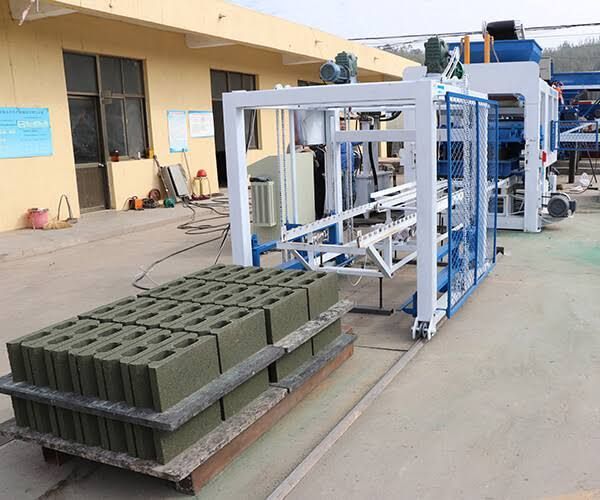
Concrete Block Making Machine Information: Hydraulic Presses, Vibrators, and Molding Systems
A concrete block making machine converts a mix of cement, aggregates, sand, water, and additives into uniform blocks through feeding, vibration, hydraulic compaction, molding, and curing.
Hydraulic presses provide compression, vibrators remove air voids and improve density, and molding systems determine the block’s size, shape, and surface finish.
How a Block Making Machine Works
Most modern machines follow a repeatable production cycle:
Batching and mixing: Cement, sand, aggregate, water, and admixtures are measured and mixed into workable concrete.
Feeding: The mix is transferred into the mold box.
Vibration: High-frequency vibration settles the material, reduces air pockets, and helps the mix fill the mold evenly.
Hydraulic pressing: A press head compresses the concrete to the required height and density.
Molding and demolding: The shaped block is released from the mold and placed on a pallet.
Curing: Blocks gain strength through moisture retention and controlled curing over several days.
The best results come from combining vibration and pressure. Vibration alone improves filling but may not achieve maximum density, while pressing alone may leave voids if the mix does not flow properly into the mold.
Hydraulic Press Systems
Hydraulic presses apply controlled downward force to compact the concrete inside the mold. They are central to producing dense, dimensionally accurate blocks with consistent strength.
Key components include:
Hydraulic pump and motor: Generate the pressure needed for compaction.
Hydraulic cylinders: Move the press head and mold components.
Press head or upper mold: Compresses the concrete from above.
Guide columns: Keep the press head aligned during movement.
Pressure valves and controls: Regulate force, speed, and safety.
Frame and base: Absorb vibration and maintain machine stability.
Hydraulic systems are especially useful for hollow blocks, solid blocks, pavers, kerbstones, and high-strength products. Consistent pressure helps maintain uniform block height and reduces variation between production batches.
Vibrator Systems
Vibrators compact the fresh concrete by creating rapid movement inside the mold. This helps the mix settle, releases trapped air, and improves contact between cement paste and aggregates.
Common vibrator types include:
Table vibrators: Vibrate the entire mold table or pallet.
Mold vibrators: Mounted directly on the mold box for targeted compaction.
External vibrators: Attached to the machine frame or mold assembly.
High-frequency vibrators: Provide faster compaction and are common in automatic machines.
Adjustable-frequency vibrators: Allow operators to tune vibration for different mixes and products.
Vibration settings must match the mix design. Too little vibration can cause honeycombing and weak edges; excessive vibration can cause segregation, where heavier aggregates settle and cement paste rises.
Molding Systems
The molding system shapes the concrete into the final product. It generally includes a lower mold box, upper press head, tamper or striker plate, pallet support, and demolding mechanism.
Typical molded products include:
Hollow concrete blocks
Solid blocks
Fly-ash bricks
Paver blocks
Kerbstones
Interlocking blocks
Curbstones
U-drain blocks
Designer and architectural blocks
Molds are usually made from hardened steel to resist abrasion and maintain dimensional accuracy. Quick-change mold systems allow one machine to produce different block sizes and designs by replacing the mold assembly.
Types of Block Making Machines
| Machine Type | Operation | Best For |
|---|---|---|
| Manual machine | Operator fills, vibrates, and removes blocks | Small workshops and startup production |
| Semi-automatic machine | Mechanical vibration and hydraulic pressing with operator assistance | Medium-scale production |
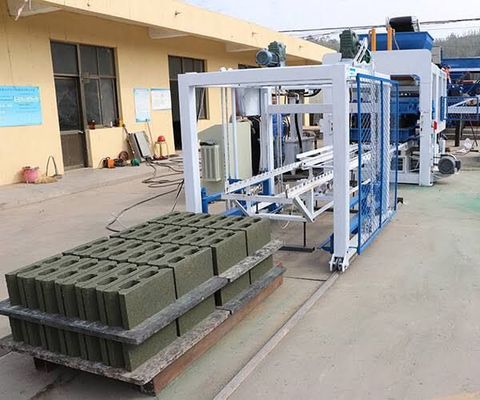
| Automatic machine | Automated feeding, pressing, demolding, and pallet handling | Large-scale continuous production |
| Stationary machine | Blocks are produced at a fixed plant location | Permanent block yards |
| Mobile machine | Machine moves near raw materials or project sites | Remote sites and on-site production |
Automatic machines often include conveyors, stackers, pallet circulation systems, electronic batching, and programmable controls. These features improve output and consistency but require more investment, maintenance, and skilled operation.
Important Machine Specifications
When comparing machines, review these specifications carefully:
Production capacity: Blocks per shift or blocks per hour.
Molding area: Determines how many blocks can be produced per cycle.
Cycle time: Time required for feeding, vibration, pressing, and demolding.
Hydraulic pressure: Affects compaction force and block density.
Vibration frequency and force: Influences compaction quality and surface finish.
Motor power: Indicates energy demand and mechanical capacity.
Mold compatibility: Determines the range of products the machine can make.
Automation level: Manual, semi-automatic, or fully automatic.
Pallet size and handling system: Important for production flow and stacking.
Machine weight and foundation requirements: Affects installation and stability.
Raw Materials and Mix Design
A typical concrete block mix includes cement, fine aggregate, coarse aggregate, water, and sometimes fly ash, quarry dust, or chemical admixtures.
General quality practices include:
Use clean, well-graded aggregates.
Maintain consistent water-cement ratio.
Avoid excess water, which reduces strength and increases shrinkage.
Use admixtures only according to manufacturer guidance.
Ensure thorough mixing for uniform color and strength.
Test blocks for compressive strength, dimensions, water absorption, and durability.
The correct mix depends on the block type, local material availability, required strength, and curing conditions.
Maintenance and Safety
Regular maintenance improves machine life and product quality.
Maintenance checklist:
Check hydraulic oil level, hoses, seals, and pressure settings.
Lubricate moving parts according to the manufacturer’s schedule.
Inspect vibrator motors, bearings, bolts, and mounts.
Clean molds after each shift to prevent concrete buildup.
Check electrical panels, sensors, emergency stops, and wiring.
Replace worn mold liners, tamper shoes, and pallet guides promptly.
Keep vibration mounts tight to prevent machine damage and uneven blocks.
Safety practices include using guards around moving parts, training operators on emergency stops, wearing protective equipment, isolating power during maintenance, and never placing hands inside the mold area while the machine is operating.
Choosing the Right Machine
Select a machine based on production demand, product range, budget, labor availability, and space.
Choose a manual or semi-automatic machine for low-volume production or a new business.
Choose an automatic hydraulic vibration machine for consistent, high-volume manufacturing.
Choose a multi-mold or quick-change system if you need blocks, pavers, and specialty products.
Choose a higher-capacity hydraulic system for dense blocks, pavers, and heavy-duty products.
Choose a mobile machine if production must move between sites.
A well-selected concrete block making machine balances output, compaction quality, mold flexibility, power consumption, and long-term maintenance costs. Hydraulic pressing, controlled vibration, and precision molding together determine whether the final blocks are strong, uniform, and commercially reliable.