Paper Bag Making Machine Learn: Turning Paper Rolls Into Eco-Friendly, Branded Carry Bags
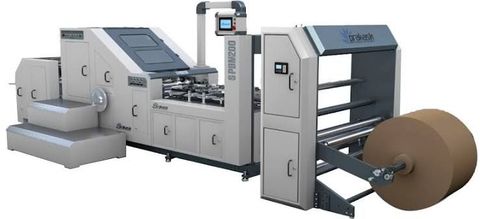
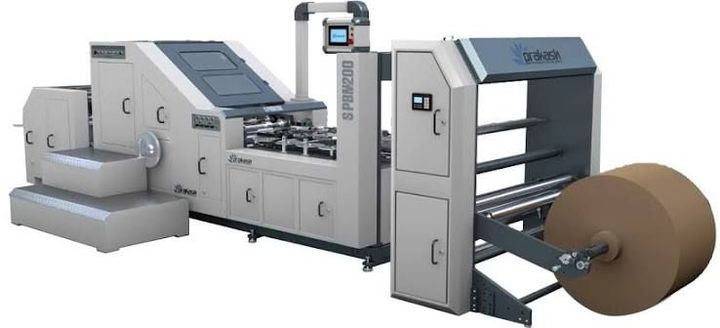
A paper bag making machine converts large rolls of kraft or printed paper into finished carry bags through unwinding, printing, tube forming, gusseting, bottom folding, gluing, handle attachment, cutting, and stacking.
These machines help businesses replace plastic carry bags with recyclable, customizable paper packaging.
How a Paper Bag Making Machine Works
Most roll-fed paper bag machines follow a continuous production process:
Paper roll unwinding: A kraft paper roll is mounted on the machine’s unwind stand.
Printing: Flexographic printing applies logos, brand colors, product details, or promotional artwork directly onto the paper roll.
Tube forming: The paper is folded and glued into a continuous tube.
Gusseting: Side pleats are formed to give the bag depth and allow it to expand.
Cutting: The tube is cut into individual bag lengths.
Bottom forming: The machine folds and glues the bottom to create a V-bottom or square-bottom bag.
Handle attachment: For shopping and carry bags, twisted paper handles or flat paper handles are inserted and glued.
Stacking and collection: Finished bags are counted, stacked, and discharged for packing.
A fully automatic machine can complete these steps in one continuous line, while smaller operations may use separate printing, tube forming, bottom pasting, and handle-attaching equipment.
Types of Paper Bags Produced
The machine configuration determines the type of bag it can make.
| Bag Type | Key Features | Common Uses |
|---|---|---|
| V-bottom bag | Simple folded bottom, lightweight, economical | Grocery, bakery, pharmacy, takeaway food |
| Square-bottom bag | Flat base and side gussets; stands upright | Retail, apparel, gifts, branded shopping bags |
| Handle carry bag | Twisted or flat paper handles; stronger construction | Boutiques, restaurants, exhibitions, premium retail |
| SOS bag | Self-opening square bottom | Food delivery, grocery, bakery |
| Flat or sachet bag | No gusset, simple seal or fold | Small retail items, dry goods, medicines |
Square-bottom bags are especially popular for branded retail because they stand upright, carry more weight, and provide a larger printable surface. V-bottom bags are generally simpler and faster to produce.
Machine Types
Roll-Fed Machines
Roll-fed machines use large paper rolls as the direct input. They are ideal for high-volume production because they minimize manual handling and support continuous operation.
They are suitable for:
Supermarket and grocery bags
Food takeaway bags
Retail shopping bags
Bakery and pharmacy bags
Branded promotional bags
Sheet-Fed Machines
Sheet-fed machines use pre-cut paper sheets instead of continuous rolls. They are often easier to use for smaller batches and custom short-run production.
They are suitable for:
Custom-designed boutique bags
Low-to-medium production volumes
Premium or specialty bags
Businesses that outsource printing and feed printed sheets into the machine
Semi-Automatic Machines
Semi-automatic machines require more operator involvement, especially for feeding, gluing, handle attachment, or stacking. They cost less and are suitable for startups or businesses producing limited quantities.
Fully Automatic Machines
Fully automatic machines integrate roll feeding, printing, tube forming, bottom folding, handle attachment, counting, and stacking. They deliver higher output, better consistency, and lower labor requirements, but require a larger investment and more technical maintenance.
Important Machine Features
When evaluating a paper bag making machine, review these features:
Bag width, length, and gusset range: Determines the bag sizes the machine can produce.
Paper GSM range: Indicates compatible paper thickness, often roughly 40–200 GSM depending on the model.
Production speed: Usually measured in bags per minute or pieces per hour.
Bottom type: V-bottom, square bottom, or both.
Handle options: Twisted handle, flat handle, patch handle, or no handle.
Printing capability: Inline flexo printing, pre-printed roll compatibility, or separate printing unit.
Gluing system: Hot-melt or cold glue application for tubes, bottoms, and handles.
Control system: PLC and touchscreen controls improve setup, accuracy, and fault diagnosis.
Paper-roll diameter and core size: Must match your available paper supply.
Changeover time: Determines how quickly you can switch between bag sizes.
Safety features: Emergency stops, guards, sensors, and overload protection.
Choosing the Right Machine
Select the machine based on your target market and production volume.
| Business Need | Recommended Machine |
|---|---|
| Small bakery, pharmacy, or grocery supply | Semi-automatic V-bottom machine |
| Medium-scale retail bag production | Automatic V-bottom or square-bottom machine |
| Branded shopping bags with handles | Automatic square-bottom machine with handle unit |
| Premium boutique packaging | Sheet-fed machine with high-quality printing and finishing |
| Large-volume commercial supply | Fully automatic roll-fed line with inline printing |
Before purchasing, test the machine with the actual paper grade, GSM, bag size, handle type, and print design you plan to use.
Raw Materials Required
The main input is paper, typically kraft paper because it is strong, recyclable, and suitable for carrying products.
Other materials include:
Kraft paper rolls: Brown, white, or colored paper in the required GSM.
Adhesive: Cold glue or hot-melt adhesive for tube seams, bottoms, and handles.
Handle paper: Kraft paper twisted into rope handles or converted into flat handles.
Printing inks: Water-based flexographic inks are commonly used for paper packaging.
Packaging materials: Cartons, shrink film, or bundles for finished bag storage and dispatch.
Paper quality directly affects bag strength, print quality, machine downtime, and customer experience. Poor-quality paper can cause jams, weak seams, misaligned printing, and torn handles.
Branding and Eco-Friendly Design
Paper bags are valuable marketing tools because they carry a brand beyond the point of sale. A well-designed bag can include a logo, tagline, website, social media handle, product imagery, and brand colors.
Eco-friendly branding practices include:
Use recyclable or responsibly sourced kraft paper.
Choose water-based inks and low-VOC adhesives.
Avoid excessive plastic lamination.
Use paper handles instead of plastic handles.
Keep designs simple to reduce ink use.
Print recycling or reuse messages on the bag.
Offer reusable, durable bags for premium retail customers.
A paper bag is only truly sustainable when it is made from responsibly sourced material, designed for reuse or recycling, and produced efficiently with minimal waste.
Production and Quality Control
Maintain consistent quality by checking:
Bag dimensions and gusset alignment
Bottom-seal strength
Handle attachment strength
Print registration and color consistency
Paper jam frequency
Glue application and drying
Bag count accuracy
Finished-bag appearance and cleanliness
Keep records of paper lot numbers, machine settings, production output, defects, and maintenance activities. This makes it easier to identify the cause of quality problems and improve productivity.
Maintenance and Safety
Regular maintenance reduces downtime and extends machine life.
Maintenance tasks include:
Clean glue rollers, nozzles, and application systems.
Inspect cutting blades, folding plates, and forming units.
Lubricate bearings, chains, and moving parts as specified.
Check sensors, emergency stops, belts, and electrical connections.
Calibrate printing and registration systems.
Remove paper dust and adhesive buildup.
Keep spare blades, belts, sensors, and glue parts available.
Operators should be trained on safe roll loading, blade handling, machine guards, emergency stops, lockout procedures, and proper glue handling.
Business Considerations
A successful paper bag business depends on more than the machine. You need reliable paper supply, consistent demand, efficient printing, skilled operators, and a clear product range.
Key factors to evaluate:
Local demand from retailers, restaurants, pharmacies, and brands
Bag sizes and handle styles most needed in your market
Paper availability and price stability
Printing capability for custom branded orders
Minimum order quantities and delivery timelines
Machine utilization rate and labor cost
Competition from plastic, nonwoven, and other paper bag suppliers
Start with one or two high-demand bag sizes, then expand into premium handled bags or custom-printed retail packaging as orders grow.