Industrial Electrical Sockets: A Guide to Connections, Standards, and Applications
Industrial sockets are electrical connection devices designed to connect equipment, machinery, distribution systems, and power sources in demanding environments.
Unlike ordinary household outlets, industrial electrical sockets are generally designed around factors such as current rating, voltage, environmental exposure, mechanical strength, and repeated connection and disconnection. Heavy duty industrial sockets are therefore commonly found in factories, workshops, construction areas, processing facilities, warehouses, and other industrial locations.
Context
What Are Industrial Sockets?
An industrial socket is a fixed or portable electrical connection point that receives a compatible plug. It forms part of an electrical connection system and allows electrical equipment to be connected to a power supply in a controlled manner.
Industrial sockets can be designed for different voltage levels, current ratings, phase arrangements, mounting methods, and environmental conditions. Some are intended for indoor installations, while others are designed for locations exposed to moisture, dust, vibration, chemicals, or mechanical impact.
Industrial power sockets are commonly constructed from materials such as engineering plastics, thermoplastics, rubber compounds, or metal components. The enclosure and contact arrangement depend on the intended operating environment.
How Industrial Sockets Work
The basic function is straightforward. A compatible plug enters the socket and establishes electrical contact between the equipment and the power supply. Internal contacts are arranged to maintain appropriate electrical connections for the required circuit.
Depending on the design, a socket can include:
- Live and neutral contacts for single-phase applications.
- Multiple phase contacts for three-phase equipment.
- An earth or protective grounding contact.
- Mechanical keying to prevent incompatible connections.
- Covers or protective caps for unused outlets.
- Locking mechanisms for equipment exposed to vibration.
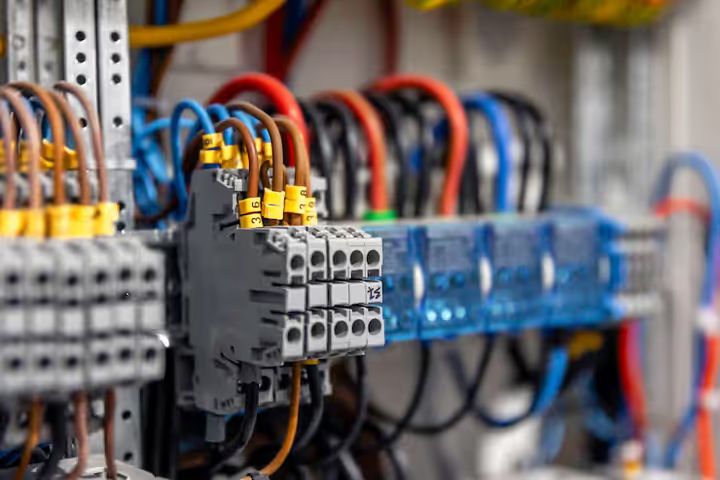
Industrial electrical connectors can also be integrated into larger connection assemblies involving plugs, couplers, cable glands, terminal blocks, and distribution units.
Common Types of Industrial Sockets
Different applications require different socket configurations. The following table illustrates several common categories.
| Socket type | Typical application | Main consideration |
|---|---|---|
| Panel-mounted socket | Machinery and control panels | Fixed installation |
| Wall-mounted socket | Workshops and industrial areas | Accessible power connection |
| Portable socket | Temporary power distribution | Mobility and protection |
| High-current socket | Heavy electrical equipment | Current capacity |
| Multi-pin socket | Machinery and control equipment | Multiple electrical circuits |
| Interlocked socket | Industrial installations | Connection and switching control |
| Weather-resistant socket | Outdoor areas | Environmental protection |
Industrial socket manufacturers may produce configurations based on regional electrical standards and particular installation requirements.
Importance
Why Industrial Sockets Matter
Electrical equipment used in industrial environments often operates under conditions that differ significantly from residential settings. Machinery can draw higher electrical loads, experience vibration, or operate in areas where dust, water, or mechanical impact is present.
A properly specified socket helps establish a suitable connection between electrical equipment and its power source. The design also helps organize connections and can reduce the possibility of using incompatible plugs and outlets.
Industrial socket outlets are used in many locations, including:
- Manufacturing plants
- Workshops and maintenance areas
- Warehouses
- Construction sites
- Agricultural facilities
- Food-processing facilities
- Energy and utility installations
- Commercial and institutional facilities
Electrical and Mechanical Considerations
Selecting an industrial socket involves more than matching the physical plug shape. Electrical and environmental characteristics must also correspond with the intended application.
Important factors include:
- Voltage rating: The socket must be appropriate for the electrical voltage of the circuit.
- Current rating: The rated current should correspond with the expected electrical load.
- Number of poles: The contact arrangement depends on the circuit configuration.
- Frequency: Electrical equipment may operate at specific supply frequencies.
- Protection rating: Enclosure protection can be important where water or dust is present.
- Material: Housing materials influence resistance to impact, heat, chemicals, and environmental exposure.
- Mounting method: Panel, wall, surface, and portable configurations serve different purposes.
- Grounding arrangement: Protective grounding is an important part of many industrial electrical systems.
High-Current Applications
High current industrial sockets are used where equipment requires substantially more electrical current than typical household appliances. They may be found with machinery such as large motors, welding equipment, compressors, industrial heaters, and specialized processing equipment.
High current connections require appropriate cable sizing, protective devices, contact arrangements, enclosure design, and installation practices. The socket rating alone does not determine whether an electrical connection is suitable for a particular machine.
Heavy duty electrical connectors may also be used where equipment needs to be repeatedly connected and disconnected. Their mechanical design can accommodate environments where ordinary connectors may not be appropriate.
Recent Updates
Greater Focus on Safety and Standardization
From 2024 through 2026, industrial electrical connection systems have continued to develop around safety, compatibility, environmental protection, and more consistent equipment integration. Manufacturers and equipment designers increasingly consider electrical protection and connection design as parts of the wider industrial electrical system.
Internationally recognized standards also continue to influence the design and testing of industrial sockets. Standards help define characteristics such as dimensions, electrical ratings, protection against ingress, and testing procedures.
Smart Industrial Power Connections
Another developing area is the integration of electrical connections with monitoring and automation systems. Advanced industrial power connector systems may be incorporated into equipment that monitors electrical parameters or operating conditions.
This does not mean that every industrial socket contains electronic monitoring. In many installations, conventional passive sockets remain appropriate, while monitoring is handled separately through electrical meters, control systems, or sensors.
Environmental Protection
Industrial facilities increasingly use equipment designed for specific environmental conditions. Socket designs can therefore include features intended to improve resistance to water, dust, impact, corrosion, and temperature variations.
For outdoor or demanding applications, enclosure protection classifications can be particularly important. The appropriate protection level depends on the actual installation environment rather than simply the general category of the equipment.
Laws or Policies
Electrical Requirements in India
In India, industrial electrical installations are influenced by the Electricity Act, applicable Central Electricity Authority regulations, the Bureau of Indian Standards framework, and relevant state-level requirements. The exact rules that apply depend on the type of installation, voltage level, facility, and electrical system.
The Central Electricity Authority establishes regulations relating to electrical safety and supply, while BIS develops Indian Standards covering many electrical products and systems.
Industrial electrical sockets and associated equipment may be designed according to applicable Indian or internationally recognized standards, depending on the product and installation. IEC standards are also widely referenced in industrial electrical equipment.
Safety and Installation Considerations
Electrical installation should account for protection against electric shock, overcurrent, short circuits, inadequate grounding, and unsuitable environmental conditions. Industrial facilities may also have inspection, testing, documentation, and maintenance requirements under applicable regulations.
Some industrial locations have additional hazards, such as combustible dust, flammable gases, moisture, or corrosive substances. In these environments, electrical equipment may need specific protection characteristics and certifications.
The applicable requirements should always be determined from the regulations and standards relevant to the particular facility. This article provides general information rather than professional electrical guidance.
Tools and Resources
Standards and Regulatory Resources
Several resources can help readers understand industrial electrical connections and applicable requirements in India. These include:
- Bureau of Indian Standards publications for relevant Indian Standards.
- Central Electricity Authority resources for electrical safety regulations.
- Ministry of Power resources concerning India's electricity framework.
- IEC publications covering international electrical and connector standards.
- Electrical installation documentation supplied with industrial equipment.
Selection and Planning Tools
Electrical engineers and facility planners may use several technical resources when designing industrial connection systems. Common tools include electrical load calculations, voltage-drop calculators, cable-sizing references, protection-device coordination documents, and enclosure protection references.
A basic socket-selection worksheet can record:
| Parameter | Information to identify |
|---|---|
| Supply voltage | Nominal system voltage |
| Current | Expected operating current |
| Phase arrangement | Single-phase or three-phase |
| Frequency | Supply frequency |
| Pole configuration | Number and arrangement of contacts |
| Environment | Indoor, outdoor, wet, dusty, or corrosive |
| Mounting | Wall, panel, surface, or portable |
| Protection | Required enclosure protection |
| Grounding | Protective earth arrangement |
These details help establish whether a particular connection configuration corresponds with the intended electrical installation.
FAQs
What are industrial sockets used for?
Industrial sockets provide electrical connection points for machinery, tools, distribution equipment, and other electrical systems. They are commonly used in manufacturing facilities, workshops, warehouses, construction areas, and processing plants.
How are heavy duty industrial sockets different from household outlets?
Heavy duty industrial sockets are designed around industrial electrical loads and operating conditions. Depending on their configuration, they may provide higher current ratings, stronger mechanical construction, environmental protection, locking arrangements, or different phase and pole configurations.
What are high current industrial sockets used for?
High current industrial sockets are used for electrical equipment that requires substantial current, such as certain motors, welding equipment, heaters, compressors, and industrial machinery. Their electrical rating must correspond with the circuit and equipment requirements.
What should be considered when selecting industrial electrical sockets?
Important considerations include voltage, current, phase configuration, frequency, number of poles, grounding arrangement, mounting method, environmental conditions, and required enclosure protection. Applicable electrical standards should also be considered.
What are industrial electrical connection systems?
Industrial electrical connection systems include sockets, plugs, couplers, connectors, cables, terminal components, and related equipment used to establish electrical connections. These components can be arranged as part of machinery, distribution systems, or larger industrial electrical installations.
Conclusion
Industrial sockets form an important part of electrical connection systems used in factories, workshops, processing facilities, and other demanding environments. Their design can vary according to voltage, current, phase configuration, environmental exposure, mounting arrangement, and applicable standards. Recent developments include greater attention to environmental protection, standardization, automation, and electrical monitoring. In India, industrial socket installations are shaped by applicable electrical safety regulations, Indian Standards, and requirements relevant to the specific facility.