Industrial Humanoid Robots: Exploring Automation, Mobility, and Machine Interaction
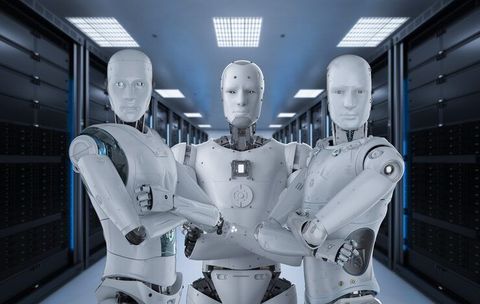
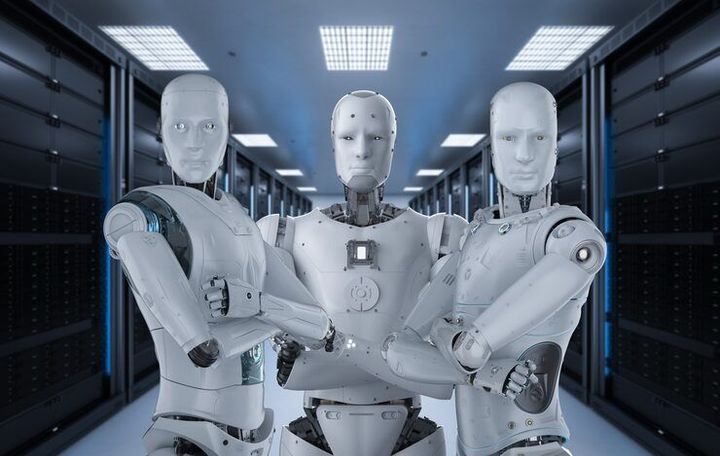
Industrial humanoid robots are robotic machines designed with a body structure that resembles the basic proportions and movement patterns of humans. They may have two legs, two arms, a torso, cameras, sensors, computing hardware, and software that allows them to interact with their surroundings.
Humanoid robots for manufacturing are being developed for industrial environments where human-oriented workspaces, tools, shelves, production stations, and material-handling areas already exist. Instead of requiring every workstation to be redesigned around a specialized machine, a humanoid robot can potentially operate within spaces created for people.
Manufacturing humanoid robots combine several technologies, including robotics, machine vision, artificial intelligence, motion control, sensors, batteries, and mechanical actuators. Their development builds on decades of industrial robotics research while adding greater emphasis on flexible movement and interaction with changing environments.
How Humanoid Robots Work
A humanoid robot typically uses sensors and cameras to observe its surroundings. Software processes this information and determines how the robot should move or interact with an object.
Actuators located in the joints provide controlled movement. Depending on the design, these may control the arms, hands, hips, knees, ankles, and other parts of the robot.
AI humanoid robots for factories can use machine-learning systems to interpret visual information, recognize objects, and adapt certain movements. However, their capabilities vary significantly between platforms, and many industrial tasks still require carefully defined operating conditions.
Main Components
An industrial humanoid robot can contain several interconnected systems:
- Cameras and depth sensors for environmental perception
- Force and torque sensors for interaction with objects
- Electric actuators for joint movement
- Robotic hands or other end-effectors
- Battery systems for mobile operation
- Onboard computing hardware
- Wireless or wired communication systems
- Safety monitoring and emergency controls
- Software for navigation, task planning, and motion control
These components work together to support activities such as transporting materials, handling components, inspection, and repetitive assembly.
Importance
Why Humanoid Robots Matter in Manufacturing
Industrial manufacturing environments often contain repetitive physical activities. Workers may need to move components between stations, retrieve materials, perform repeated handling operations, or inspect products.
Humanoid robot automation is being studied as one approach to these activities. A robot with human-like dimensions can potentially navigate aisles, reach shelves, and interact with equipment designed around human dimensions.
Robotic automation for manufacturing can also be relevant where companies need consistent execution of repetitive processes. However, the suitability of a humanoid robot depends on factors such as task complexity, workplace layout, safety requirements, production speed, and the robot's physical capabilities.
Potential Manufacturing Applications
Industrial humanoid robots may be considered for tasks such as:
- Moving components between workstations
- Loading and unloading selected equipment
- Picking and placing standardized parts
- Visual inspection
- Packaging-related handling
- Inventory movement
- Basic assembly activities
- Material preparation
- Repetitive workstation operations
Not every task is suitable for a humanoid platform. A fixed robotic arm, autonomous mobile robot, conveyor system, or specialized machine may be more appropriate for activities requiring very high precision or a fixed repetitive motion.
Human-Robot Interaction
A major consideration is how people and robots work in the same environment. Traditional industrial robots are often separated from workers using guards or controlled access areas. Humanoid robots are being developed for more flexible environments, which increases the importance of sensing, collision detection, speed control, emergency stopping, and risk assessment.
Human supervision may also remain important for unusual situations, maintenance, task changes, and activities that require judgment beyond the robot's programmed capabilities.
Comparison With Other Industrial Robots
| Robot type | Typical structure | Common applications | Operating environment |
|---|---|---|---|
| Industrial robotic arm | Fixed arm | Welding, assembly, handling | Defined workstation |
| Autonomous mobile robot | Wheeled platform | Material movement | Factory floors |
| Collaborative robot | Arm with collaborative controls | Assembly, handling | Human-accessible work areas |
| Humanoid robot | Human-like body | Handling, inspection, flexible tasks | Human-oriented environments |
| Automated guided vehicle | Guided mobile platform | Material transportation | Defined routes |
Humanoid robots are therefore one part of a broader industrial automation ecosystem rather than a replacement for every existing robotic technology.
Recent Updates
Growth of AI-Based Robotics
From 2024 through 2026, development of AI industrial robotics systems has increasingly focused on combining physical robots with advanced perception and decision-making software. Improvements in computer vision, machine learning, simulation, and language-based interfaces have contributed to research into robots that can perform multiple related tasks.
AI systems can help robots interpret visual information and respond to variations in their surroundings. However, reliable industrial operation still depends on hardware capabilities, software validation, environmental conditions, and appropriate safety controls.
Greater Focus on General-Purpose Platforms
Earlier industrial automation often relied on robots designed for a specific operation. Current humanoid robotics development places more attention on platforms that can potentially perform several tasks using software changes rather than extensive mechanical modifications.
This approach is particularly relevant to factories that manufacture different products or frequently change production layouts. Practical deployment remains dependent on factors such as battery endurance, payload capacity, dexterity, navigation, reliability, and integration with existing production systems.
Simulation and Digital Testing
Simulation has become an important part of robotics development. Virtual factory environments can be used to test robot movements, workstation layouts, task sequences, and potential collisions before physical deployment.
Digital models can also support training and evaluation of robotic systems. This approach allows developers to examine different operating conditions without requiring every experiment to take place on a physical production floor.
Increasing Factory Trials
Industrial humanoid robot manufacturers and technology developers have been conducting demonstrations and pilot projects involving manufacturing, logistics, and material handling. These projects are helping researchers evaluate how humanoid robots perform under real workplace conditions.
The transition from demonstration to routine industrial deployment involves additional considerations, including maintenance procedures, safety validation, integration with factory software, worker training, battery management, and long-term reliability.
Laws or Policies
Industrial Robot Safety in India
In India, factories using humanoid robots must consider applicable workplace safety, machinery, electrical, and occupational requirements. The exact rules depend on the type of facility, state regulations, equipment configuration, and industrial activity.
Safety planning generally involves identifying hazards associated with robot movement, mechanical components, electrical systems, battery systems, unexpected motion, and interaction between robots and people.
Risk Assessment
Before deployment, a facility may need to evaluate possible risks associated with the robot's operating area. Important considerations can include:
- Robot speed and movement range
- Payload and carried objects
- Collision hazards
- Emergency stopping procedures
- Restricted operating zones
- Battery and electrical safety
- Maintenance access
- Human interaction
- Software and communication failures
International machinery-safety standards may also be relevant, particularly when equipment is designed for export or operates within globally standardized manufacturing environments.
Data and AI Considerations
AI-enabled robots may collect visual or sensor information from their surroundings. When cameras or other systems capture identifiable individuals, organizations should consider applicable privacy and data-protection requirements.
India's Digital Personal Data Protection framework may become relevant where personal data is processed. The precise obligations depend on what information is collected, how it is processed, and the role of the organization handling it.
Tools and Resources
Robotics Simulation Platforms
Simulation platforms are useful for studying robotic movement, workstation layouts, navigation, and task sequences. They can provide virtual environments in which developers test algorithms before applying them to physical hardware.
Manufacturers and research organizations may use robot simulation software alongside digital factory models. These tools can help examine reachability, collision risks, cycle sequences, and interactions between robots and production equipment.
Performance Measurement
Factories evaluating humanoid robot automation may track several technical indicators. Examples include:
- Task completion rate
- Cycle time
- Payload capacity
- Battery operating duration
- Navigation accuracy
- Object-handling accuracy
- Unplanned intervention frequency
- Robot availability
- Safety-event records
These measurements should be interpreted according to the specific task and operating environment rather than as universal indicators of robot performance.
Integration Resources
AI humanoid robots for factories may need to communicate with manufacturing execution systems, warehouse platforms, industrial controllers, sensors, and other factory equipment.
Relevant resources can include robot software development kits, industrial communication protocols, simulation environments, digital-twin platforms, safety documentation, maintenance manuals, and equipment integration specifications.
When evaluating industrial humanoid robot manufacturers, technical documentation should be examined alongside payload, reach, battery capacity, mobility, environmental requirements, software architecture, safety features, and integration requirements.
FAQs
What are industrial humanoid robots used for?
Industrial humanoid robots can be used for repetitive material handling, inspection, component movement, selected assembly tasks, and other activities that take place in human-oriented factory environments. Their suitability depends on the robot's physical and software capabilities.
How are humanoid robots for manufacturing different from traditional industrial robots?
Traditional industrial robots are often designed around specific movements or workstations. Humanoid robots are designed around a human-like body structure and may be intended to navigate and operate in environments originally created for people.
What are AI humanoid robots for factories?
AI humanoid robots for factories combine humanoid robotic hardware with artificial intelligence, computer vision, sensors, and software for perception and task planning. Their ability to adapt varies according to the system and application.
Can humanoid robot automation replace existing factory equipment?
Not necessarily. Specialized machines and conventional robots can remain more appropriate for fixed, repetitive, high-precision processes. Humanoid platforms are primarily being investigated for tasks where flexibility and interaction with human-oriented environments are relevant.
What should manufacturers consider before using humanoid robot factory automation solutions?
Important considerations include task requirements, payload, workspace, safety, battery duration, navigation, integration with existing equipment, maintenance, worker interaction, software capabilities, and applicable regulations.
Conclusion
Industrial humanoid robots combine robotics, artificial intelligence, sensing, and human-like mechanical structures for potential use in manufacturing environments. Their applications include material handling, inspection, repetitive assembly, and other activities where flexible movement may be useful. Developments from 2024 through 2026 have emphasized AI-based perception, simulation, general-purpose robotic platforms, and factory trials. Their practical use depends on technical capabilities, workplace safety, integration requirements, and the specific manufacturing task.